Electrician Cost Australia 2026
Electrical work in Australia must be done by a licensed electrician. Costs vary significantly based on the job type, wiring complexity, and whether your switchboard needs upgrading.
| City | Typical range | Year on year |
|---|---|---|
| Sydney | $92–$170/hr | ↑ +5.2% |
| Melbourne | $84–$160/hr | ↑ +5.0% |
| Brisbane | $80–$150/hr | ↑ +5.3% |
| Perth | $84–$160/hr | ↑ +4.6% |
| Adelaide | $74–$140/hr | ↑ +5.7% |
| Gold Coast | $78–$145/hr | ↑ +5.3% |
| Canberra | $76–$140/hr | ↑ +5.1% |
| Hobart | $72–$135/hr | ↑ +5.1% |
| Darwin | $80–$150/hr | ↑ +5.1% |
| Newcastle | $76–$140/hr | ↑ +5.2% |
| Geelong | $74–$140/hr | ↑ +5.0% |
| Sunshine Coast | $78–$145/hr | ↑ +5.3% |
| Townsville | $86–$160/hr | ↑ +5.3% |
| Wollongong | $86–$160/hr | ↑ +5.2% |
| Byron Bay | $84–$160/hr | ↑ +5.2% |
Choose Your City
National Pricing Overview
| Service | Low | Typical | High |
|---|---|---|---|
| Electrician (hourly rate) | $80/hr | $100 | $150 |
| Call-out / service fee | $50flat | $110 | $150 |
| New powerpoint installation | $150per point | $200 | $300 |
| Switchboard upgrade | $900per job | $2,250 | $3,500 |
| Ceiling fan installation | $150per fan | $250 | $400 |
| LED downlight installation | $60per light | $110 | $150 |
| Safety switch installation | $150per switch | $230 | $350 |
| Smoke alarm (supply + install) | $100per alarm | $150 | $250 |
| Rewiring (per room) | $1,000per room | $1,800 | $3,000 |
| Full house rewire (3-bed) | $8,000total | $12,000 | $20,000 |
| EV charger installation | $1,000installed | $2,000 | $3,000 |
| 22 kW three-phase EV charger, supply + install (three-phase power already in) | $2,800per charger | $3,500 | $4,500 |
| EV charger installation only (customer-supplied charger) | $500per job | $1,075 | $1,500 |
| Single-phase to three-phase power supply upgrade | $3,500per job | $5,000 | $6,500 |
| Outdoor lighting | $150per light | $300 | $500 |
| Fault finding / diagnostics | $150per visit | $250 | $400 |
| Emergency / after-hours call-out fee | $150per visit | $240 | $500 |
| Emergency / after-hours visit, all-in (call-out + first hour) | $200per visit | $400 | $700 |
| Electrician day rate | $700per day | $850 | $1,050 |
| After-hours hourly rate (evenings, weekends, public holidays; excl. call-out) | $130/hr | $170 | $280 |
| Solar inverter replacement, 5 kW string inverter (supply + install) | $1,100installed | $2,150 | $3,000 |
| Three-phase switchboard upgrade | $2,500per job | $3,600 | $5,500 |
| USB powerpoint installation (replacing an existing powerpoint) | $110per point | $160 | $280 |
How electrician prices compare across 17 cities, the $80–$150 hourly band against every other trade and how they move month to month: Tradie Price Index, November 2026 →
You're in.
A local installer will be in touch about your job. No spam, no call centre.
Ready to get quotes for electrician work? Get a quote from a local tradie — free, no obligation.
Get free quotes →National average prices. Select a city above for location-specific pricing.
Electricians in Australia charge $80–$150 per hour for standard residential work, with most jobs also attracting a call-out fee of $50–$150. The total cost depends on the job type, complexity, time of day, and your suburb.
Common Electrical Jobs and What They Cost
Electrician pricing in Australia is usually quoted per job rather than hourly for standard work. Here's what the most common residential electrical jobs cost, including labour and materials:
| Job | Cost Range | Time Required |
|---|---|---|
| Install a single powerpoint | $150–$300 | 30–60 minutes |
| Install a double powerpoint | $180–$300 | 30–60 minutes |
| Install USB powerpoint | $110–$280 | 30–60 minutes |
| Install downlights (per light) | $60–$150 | 20–40 minutes |
| Install pendant light | $150–$350 | 30–90 minutes |
| Install ceiling fan | $150–$400 | 1–2 hours |
| Install dimmer switch | $120–$250 | 30–60 minutes |
| Install smoke alarm (hardwired) | $100–$250 | 30–60 minutes |
| Install safety switch (RCD) | $150–$350 | 30–60 minutes |
| Full switchboard upgrade | $900–$3,500 | 4–8 hours |
| Rewire a room | $1,000–$3,000 | 1–2 days |
| Full house rewire (3-bed) | $8,000–$20,000 | 3–7 days |
| Install EV charger (Level 2) | $1,000–$3,000 | 2–4 hours |
| Install outdoor lighting | $150–$500 per light | 1–2 hours |
Most electricians charge a callout fee of $50–$150 on top of the job cost. This covers travel time, vehicle costs, and the first 15–30 minutes of work. Some electricians waive the callout fee if you proceed with the job. Always ask whether the callout fee is included in the quoted price.
Switchboard Upgrades: When You Need One and What It Costs
If your home was built before 1990, there's a good chance your switchboard uses old ceramic fuses rather than modern circuit breakers and safety switches. A switchboard upgrade is one of the most important electrical jobs you can do — it protects your home from electrical fires and is often required before other electrical work can proceed.
| Switchboard Job | Cost Range | When You Need It |
|---|---|---|
| Safety switch (RCD) installation | $150–$350 | Required in some states when a home is sold or rented, and recommended on all circuits — protects against electric shock |
| Replace ceramic fuses with circuit breakers | $900–$3,500 | Old-style fuse boxes with wire fuses |
| Full switchboard upgrade (single phase) | $900–$3,500 | Adding circuits, solar, EV charger, or major renovation |
| Full switchboard upgrade (three phase) | $2,500–$5,500 | Commercial or large residential with high power demands |
| Switchboard + meter box relocation | $3,000–$6,000 | Renovations that move the meter position |
Signs you need a switchboard upgrade include: fuses blowing regularly, lights flickering when appliances run, a burning smell near the switchboard, or visible damage to wiring. If you're installing solar panels or an EV charger, the installer will usually check your switchboard capacity first — an upgrade may be required before the main job can begin.
Electrician Callout Fees and Hourly Rates Explained
Electricians in Australia typically charge in one of three ways: a flat callout fee plus hourly rate, a fixed quote per job, or a combination. Understanding how pricing works helps you compare quotes fairly.
For call-out fees, day rates and after-hours rates across 17 trades, see tradie hourly rates in Australia.
| Pricing Model | Typical Range | Best For |
|---|---|---|
| Callout fee | $50–$150 | Covers travel + first 15–30 mins of work |
| Hourly rate (standard hours) | $80–$150/hr | Open-ended diagnostic or repair work |
| Hourly rate (after hours) | $130–$280/hr | Evenings, weekends, public holidays |
| Emergency callout | $150–$500+ | Urgent safety issues, power outages |
| Fixed quote (per job) | Varies | Defined scope — installations, upgrades |
For small jobs like replacing a switch or installing a powerpoint, a fixed quote is usually cheapest. For troubleshooting or fault-finding where the scope is unclear, expect to pay hourly. Emergency electricians charge a premium — if the job isn't urgent, booking during standard business hours (Monday–Friday, 7am–4pm) saves 30–50% on labour.
What Affects Electrician Costs in Australia
Switchboard condition
If your home has an old switchboard (ceramic fuses), most jobs will require an upgrade first — adding $900–$3,500 before the actual work begins.
Cable runs & access
Running new cables through walls, ceilings, or under floors takes time. Single-storey homes with roof access are cheaper than multi-storey or slab-on-ground.
Compliance requirements
Australian electrical standards change regularly. Older Australian homes may need additional work to meet current codes, even for simple jobs.
Number of points
Electricians often discount per-point rates when you're installing multiple powerpoints, lights, or switches in one visit.
Time of day
After-hours electrical work in Australia costs more than business-hours work. Unless it's a safety issue, book during business hours.
Materials quality
Premium switches, smart home wiring, and commercial-grade components cost more than standard residential fittings.
How to Save Money on Electrician Cost in Australia
EV charger installation cost in Australia: what an electrician charges
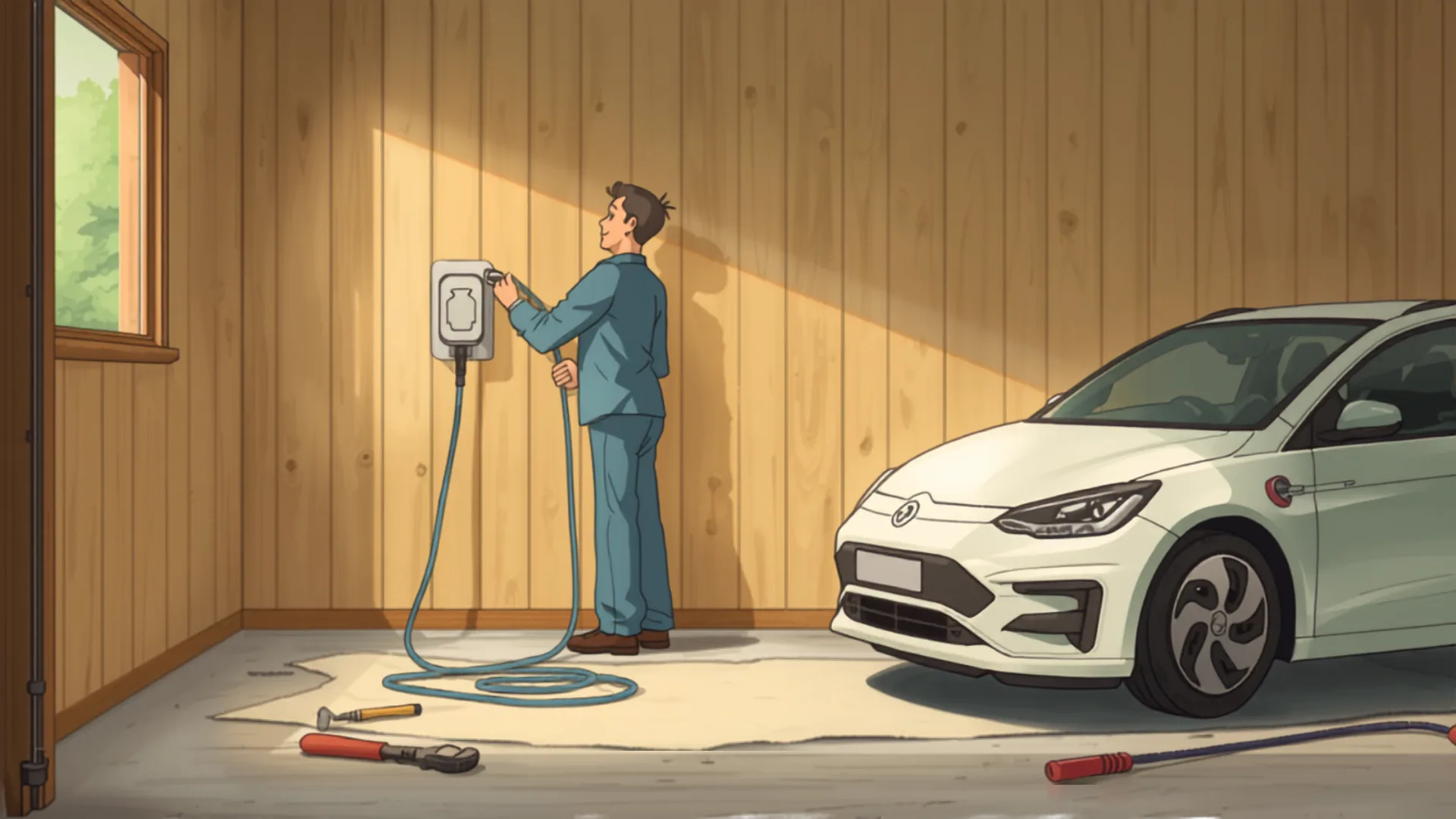
Across Australia, an EV charger job on this page takes one of three shapes: an electrician supplying and fitting a standard charger, a 22 kW three-phase charger on a home that already has three-phase power, or fitting a charger you bought yourself. Changing the home's power supply is its own line.
Home EV charger prices in Australia
A standard EV charger, supplied and installed in Australia, is $1,000–$3,000, with $2,000 the typical figure. A 22 kW three-phase charger on a home with three-phase power already at the board is $2,800–$4,500, typically $3,500 for the charger and the install together.
If you have bought a charger already, the installation alone is $500–$1,500, typically $1,075. Ask each electrician to write down the cable run from the switchboard to the charger in metres, whether the circuit gets its own safety switch, and what the cable crosses on the way, so every quote prices the same job.
Three-phase power upgrade cost for an EV charger in Australia
The 22 kW row assumes three-phase power is already in. Converting a single-phase home to three-phase supply is $3,500–$6,500, typically $5,000. That is a different job from a three-phase switchboard upgrade at $2,500–$5,500, which replaces the board on a home that has three phases already.
On a single-phase home, a 22 kW charger at $3,500 and the supply upgrade at $5,000 come to $8,500 before any switchboard work. Set that beside the standard charger row at $2,000 and ask each electrician to price both options on one page.
Electrician Cost in Australia by Job Size
Say a visit takes two hours of work, an assumption for the example. The call-out plus two hours at the hourly rate comes to $210–$450, built from $50–$150 for the call-out and $80–$150 an hour. A single new powerpoint is a fixed $150–$300 instead, a job priced by the item rather than by time, so ask which method your quote uses.
What moves a short job is the cable. A point beside an existing circuit can sit near the low end of its row, while one that needs a long run through the ceiling or under the floor can sit near the high end. Putting a powerpoint, a light and a fan on one visit means a single call-out covers all three.
Electrician Cost in Australia: What the Quote Should Include
A good electrician quote in Australia is an itemised list, not a single figure. It shows what the call-out covers, how time is charged and a price for each point, light or fan counted, so two quotes for the same job can be read side by side before anyone is booked.
- The call-out fee, $50–$150, with a note on whether it covers the first stretch of work or sits on top of the hourly rate.
- The hourly rate, $80–$150 an hour, and how time is counted: from arrival or from starting work, and in what steps.
- A day rate, $700–$1,050, written in where the list of work will fill a day, so it can be set against hours plus one call-out.
- After-hours work on its own line: the call-out at $150–$500 and the evening and weekend rate at $130–$280 an hour, kept apart from weekday figures.
- Each powerpoint, light, fan and alarm counted by number and priced per item, for example a powerpoint at $150–$300 and a downlight at $60–$150.
- Switchboard work as a separate item: an upgrade at $900–$3,500, with breakers and safety switches listed, and any three-phase board at $2,500–$5,500 on its own line.
- The cable runs described: which walls, ceilings or floors they cross and how far from the board, since distance and access move the labour.
- Fault finding priced as a visit at $150–$400, so a search for a tripping circuit is not left as open-ended hours.
- Parts and fittings named, the warranty on parts and workmanship, dates, payment stages and GST, with the electrician's licence number and insurance asked for.
Frequently Asked Questions — Electrician Cost in Australia
About This Guide
Our electrician cost guides cover 17 major Australian cities with location-adjusted pricing. Updated monthly — last reviewed November 2026.
Four deep-dives on electrician cost